Potpourri: Dried Flower Décor and Small Balcony Ideas
| On : August 20, 2026Potpourri combines dried flowers, petals, herbs, spices, and fragrance oils to add color and scent to your home. You can use it in bowls, trays, sachets, or bathrooms while giving dried roses, palms, and other botanicals a second purpose.
Potpourri uses dried plant materials to provide natural fragrance and decorative texture in your home. This guide covers how to dry and preserve flowers, refresh potpourri, display dried blooms, and create simple arrangements with wood flowers, bamboo sticks, and flower ornaments.
You’ll also find practical ideas for styling a small balcony with dried florals, statement palm leaves, and carefully chosen accessories. Whether you buy florals in bulk or reuse flowers from a bouquet, you can create lasting home décor with simple techniques.
Key Takeaways
- You can make and display potpourri with dried botanicals and fragrance.
- Dried flowers can enhance frames, arrangements, ornaments, and other décor.
- Small balconies can gain color and texture through simple floral styling.
Potpourri Fundamentals
Potpourri combines dried botanical materials with fragrance to freshen a room and add decorative texture. You can adjust its ingredients, scent strength, container, and placement to suit different areas of your home.
Definition and Traditional Uses
Potpourri is a mixture of dried flowers, leaves, herbs, spices, fruit peels, and other plant materials. You place it in an open bowl, tray, jar, or sachet so its natural aroma and added fragrance can disperse gradually.
Traditional potpourri often included rose petals, lavender, rosemary, cloves, cinnamon, and dried citrus peel. People used these blends to scent rooms, wardrobes, drawers, and storage containers before modern air fresheners became common.
You can also use potpourri as home décor. Choose a shallow tray for a centerpiece, a decorative bowl for a living room, or a small sachet for a bathroom or linen cupboard. Keep dried blends away from moisture, direct sunlight, children, and pets that might chew the materials.
Common Ingredients and Fragrance Sources
Common ingredients include dried rose petals, lavender, eucalyptus, chamomile, hydrangea, citrus peel, cinnamon sticks, star anise, cloves, pinecones, and dried leaves. Large materials, such as dried palms or bamboo sticks, can add height and structure to an arrangement.
Essential oils provide much of the fragrance. Add a few drops of lavender, lemon, orange, cedarwood, or rosemary oil to the dried mixture, then stir it gently and let it rest in a sealed container for several days. You can refresh the aroma with a small amount of oil when the scent fades.
A fixative, such as orris root powder or ground benzoin, can help the fragrance last longer by slowing evaporation. Use oils sparingly because excess moisture can soften or damage dried materials.
Potpourri Versus Other Home Fragrance Options
| Option | Main feature | Best use |
|---|---|---|
| Dried potpourri | Decorative materials with added fragrance | Bowls, trays, shelves, bathrooms |
| Scented sachets | Enclosed dried blend | Drawers, closets, luggage |
| Simmer pots | Fresh ingredients heated in water | Short-term kitchen or living-area fragrance |
| Candles | Fragrance released through heat | Controlled ambiance with an open flame |
| Reed diffusers | Fragrance carried through reeds | Continuous scent without a flame |
Dried potpourri works well when you want fragrance and visible texture in the same display. Unlike simmer pots, it requires no water or heat, but its scent usually remains softer. Unlike candles and diffusers, it does not provide an active fragrance release unless you stir the blend or refresh it with essential oil.
Choosing and Using Potpourri
Choose potpourri according to the room’s size, ventilation, and purpose. Use decorative blends to add color and texture, refresh them carefully, and keep them away from moisture, heat, children, and pets when necessary.
Selecting Scents for Different Rooms
Choose lighter scents for areas where you spend extended periods. Lavender, rose, and jasmine work well in bedrooms, entryways, and living rooms because they provide recognizable floral notes without requiring a strong aroma.
Use citrus, eucalyptus, or herb-based blends in kitchens and work areas, where fresh scents suit the setting. Avoid placing heavily scented potpourri beside food, as dried flowers, spices, and fragrance oils can absorb nearby odors.
For a small room, select a modest bowl and use less fragrance oil. In a large, well-ventilated room, a larger arrangement or two small bowls can distribute the scent more evenly. Check the label for allergens and keep fragrance oils away from skin, fabrics, and polished surfaces.
How to Display Decorative Blends
Place potpourri in a shallow, breathable bowl so you can see the dried flowers, petals, leaves, and spices. Ceramic, glass, wood, and metal containers can work well, but avoid sealed jars because they prevent the aroma from dispersing.
Arrange larger pieces, such as dried palms, seed pods, or wood flowers, around the edge. Add smaller petals and buds in the center to create texture without compressing the mixture. Match the colors to your room rather than filling the container beyond its rim.
Use potpourri in entryways, living rooms, bedrooms, or on covered balconies protected from rain and direct sunlight. Turn the pieces occasionally to expose different surfaces and remove faded or dusty material with clean, dry hands.
Bathroom Placement and Care
Choose a small, open bowl or a breathable sachet for bathroom potpourri. Place it on a dry shelf, vanity corner, or covered storage unit, away from sinks, showers, and areas where splashing can wet the blend.
Moisture can cause dried flowers to soften, develop mold, or lose their fragrance. Check the mixture weekly, especially in a humid bathroom. Remove damp pieces immediately and replace the entire blend if you notice mold, discoloration, or a musty smell.
Keep the container away from heated towel rails and direct sunlight. Do not pour fragrance oil onto a wet mixture; allow the contents to dry fully first, then add only a few drops to a small absorbent material such as a dried flower or wood piece.
Expected Fragrance Lifespan
Decorative potpourri can remain visually attractive for months or longer, but its scent usually fades sooner. The fragrance lifespan depends on the ingredients, oil quality, airflow, humidity, sunlight, and how often you disturb the blend.
When the aroma weakens, add a few drops of a compatible essential or fragrance oil to absorbent pieces. Mix gently and wait several hours before adding more, because excess oil can stain bowls, furniture, clothing, or flooring.
Store unused potpourri in an airtight container in a cool, dark, dry place. Label the scent and date the container. Replace the blend when the flowers become brittle, dusty, discolored, or unable to hold fragrance after careful refreshing.
Dried Flowers for Home Styling
Dried flowers add texture, color, and long-lasting natural detail to interiors. You can choose varieties suited to your style, preserve them correctly, and display them in vases, frames, wreaths, or decorative bowls.
Popular Types of Dried Florals
Choose dried flowers according to the shape, color, and texture you want to bring into a room.
- Pampas grass and dried palms: These create height and work well in floor vases or large arrangements.
- Roses: Dried roses provide recognizable blooms for romantic, vintage, or traditional décor.
- Lavender: Its slender stems and natural fragrance suit small vases, sachets, and bathroom displays.
- Bunny tails and wheat: These add soft texture and a relaxed, rustic appearance.
- Hydrangeas: Their broad flower heads make an arrangement look fuller.
- Statice and strawflower: These retain color well and add small, structured blooms.
Keep dried flowers away from direct sunlight, moisture, and areas with frequent handling. You can combine neutral stems with one or two colored flowers to create a balanced arrangement without making the display look crowded.
How Long Dried Flowers Last
Most properly dried flowers last one to three years indoors, although their appearance depends on light, humidity, dust, and handling. Stems such as pampas grass, wheat, and bunny tails often remain attractive longer than delicate petals.
To extend their usable life, place arrangements in a dry room away from windows with strong sunlight. Avoid bathrooms with heavy steam unless you replace the flowers regularly, because moisture can cause softening, mildew, or color changes.
Dust your arrangement gently with a cool hair dryer set to low speed, or use a soft makeup brush on sturdy stems. Do not spray water on dried flowers. When petals become brittle, faded, or heavily shed, replace individual stems instead of discarding the entire arrangement.
Dried Rose Arrangement Ideas
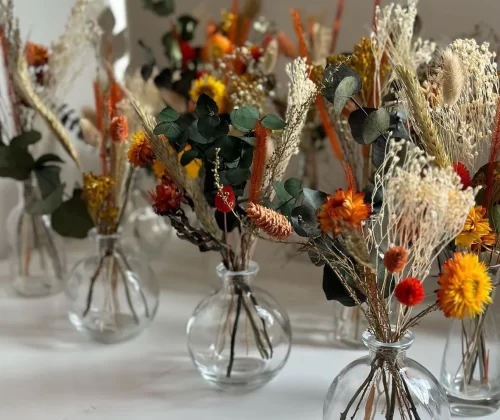
Dried roses work well as a focal point because their flower heads remain visually distinct after drying. Place three to seven roses in a narrow ceramic vase, and add eucalyptus, baby’s breath, or preserved grasses to create height and contrast.
For a compact display, trim the stems and arrange the rose heads in a shallow bowl with dried leaves. You can also combine cream, blush, and muted red roses for a layered palette, or use one color for a cleaner look.
To preserve roses, remove excess leaves, tie the stems loosely, and hang them upside down in a dark, dry, well-ventilated space. Allow roughly two to three weeks for complete drying. Handle the petals carefully because dried roses can crack when squeezed or moved repeatedly.
Home Decor Flower Displays
Match the container to the scale of your room and arrangement. Use a tall floor vase for dried palms and long grasses, a narrow bottle for a few delicate stems, or a shallow bowl for petals and compact flowers.
You can display dried flowers in several practical ways:
- Entryway: Place a small vase on a console where it will not obstruct keys or storage.
- Living room: Use a larger arrangement beside a sofa, cabinet, or empty corner.
- Bedroom: Choose muted colors and keep the arrangement away from bedding and high-traffic areas.
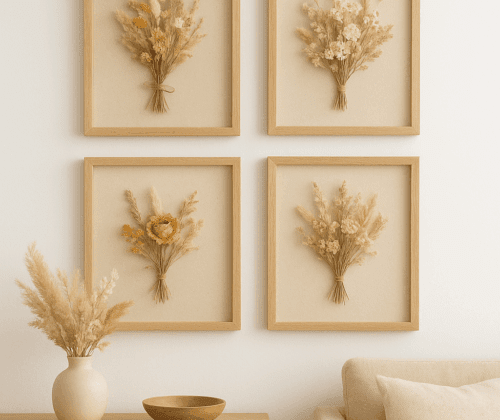
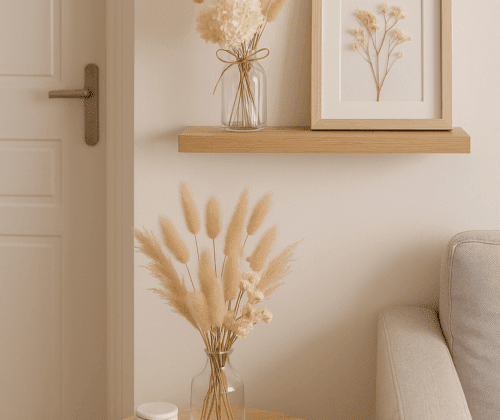
- Wall décor: Press flat flowers between glass in a frame, leaving space around each specimen.
- Table setting: Use low arrangements so they do not block conversation or views.
Secure tall stems with floral foam, stones, or a weighted vase. For a consistent style, repeat one color or material from the room, such as wood, ceramic, or woven fiber.
Creative Projects With Dried Blooms
You can turn dried flowers into framed art, ornaments, scented blends, and practical decorative pieces. Choose fully dry materials, handle fragile petals gently, and keep finished projects away from moisture and strong sunlight.
Framed Botanical Displays
Press flat flowers and leaves between absorbent paper inside a heavy book for one to two weeks. Replace damp paper during the first few days to reduce discoloration and mold. For three-dimensional blooms, use naturally dried flowers in a deep frame rather than pressing them.
Arrange your materials on acid-free cardstock before attaching them. Use small dots of archival glue or narrow strips of acid-free tape, and leave enough space between stems and petals to prevent a crowded appearance. Add labels with the plant name and date if you want a botanical-style display.
Choose UV-resistant glazing when possible. Hang the frame away from bathrooms, kitchen steam, direct sun, and heating vents. These conditions can fade petals and make plant material brittle.
Flower Ornaments and Petal Crafts
Create ornaments by placing dried petals, small flowers, or seed heads inside clear glass or plastic baubles. Add a ribbon or cord for hanging, but avoid packing the container tightly because pressure can crush delicate material. You can also attach small blooms to cardboard shapes with craft glue and cover them with clear sealant.
For a more durable project, embed clean, completely dry petals in suitable casting resin. Follow the product’s safety instructions, work in a ventilated area, and allow the resin to cure fully before handling. Keep moisture out of the finished piece, since trapped water can cloud resin or encourage decay.
You can make floral gift tags, bookmarks, magnets, and wreath accents from leftover stems and petals. Test adhesives on spare material first because some glues darken pale flowers.
Uses for Leftover Petals
Sort loose petals by color and condition before using them. Keep clean, dry pieces for paper crafts, candle displays, sachets, or decorative bowls. Discard material with mold, damp spots, or an unpleasant odor rather than trying to salvage it.
Scatter petals beneath a centerpiece, place them in a shallow dish, or use them to decorate wrapped gifts. You can also mix petals into homemade paper pulp, provided the flowers contain no pesticides or unknown treatments. Avoid placing loose petals near food unless you specifically purchased edible flowers.
Store unused petals in an airtight container with a label and date. Add a small silica-gel packet, kept separate from the plant material, to help control residual moisture.
Dried Floral Potpourri Recipes
Potpourri combines dried plant material with fragrance and a fixative that helps the scent last. Use dried rose petals, lavender, calendula, eucalyptus, citrus peel, cinnamon pieces, or pinecones. Make sure every ingredient feels crisp and dry before mixing.
For a rose-lavender blend, combine:
- 2 cups dried rose petals
- 1 cup dried lavender
- ½ cup dried eucalyptus leaves
- 1 tablespoon orris root powder
- 10–15 drops of lavender or rose essential oil
Mix the dried ingredients in a sealed container, add the orris root and oil, then close the container and shake gently. Let the mixture rest for several days, shaking it once daily, before transferring it to a ventilated bowl or sachet.
Keep potpourri away from children, pets, flames, and damp rooms. Refresh the scent with a few drops of oil when needed, and replace the mixture if it develops moisture or mold.
Drying and Preserving Fresh Flowers
You can preserve fresh flowers by removing moisture gradually, protecting delicate petals, and storing the finished flowers away from humidity and direct sunlight. Choose blooms without bruising, trim excess leaves, and begin the process soon after cutting.
Air-Drying Methods
Air-drying works well for roses, lavender, statice, strawflowers, baby’s breath, and grasses. Remove lower leaves, group stems loosely, and tie them with string or a rubber band. Hang each bundle upside down in a dark, dry, well-ventilated place.
Leave space between bundles so air can circulate. Avoid kitchens, bathrooms, and sunny windows because steam and light can cause mold or fading. Most flowers dry in one to three weeks, although thick stems and dense blooms may need longer.
You can also dry individual flowers on a mesh rack or place them upright in a vase without water. This method suits flowers with sturdy stems but may allow some heads to bend. When the petals feel papery and the stems snap rather than bend, remove dust gently and store the flowers in a dry container.
Drying Flower Petals
Spread loose petals in a single layer on a baking tray, mesh screen, or sheet of clean paper. Keep them in a warm, dry room with good airflow, and turn them once a day to expose damp areas. Thin petals may dry within several days; thicker petals can take up to two weeks.
For faster drying, use an oven at its lowest setting, usually about 60–90°C (140–194°F). Leave the door slightly open, check the petals frequently, and remove them when they feel crisp. Excess heat can darken petals and reduce their natural scent.
Store completely dry petals in an airtight jar away from sunlight. Add them to potpourri, sachets, cards, wreaths, or framed floral designs. Discard any petals that develop soft spots, discoloration, or a musty smell.
Preserving Flowers With Salt
Salt can draw moisture from small flowers and petals, but it may cause colors to fade and does not work equally well for every bloom. Use clean, dry salt and a sealable container. Pour a thin layer into the base, place the flowers on top, and cover them gently until they are fully surrounded.
Fine salt covers flowers more evenly than coarse crystals. Check the flowers after several days and continue until the petals feel dry and firm. The process may take one to three weeks, depending on the flower’s size and moisture content.
Handle the dried flowers carefully because salt can make petals brittle. Brush away residue with a soft paintbrush, then store the flowers in a dry container. For better color retention, silica gel usually performs more reliably than salt, especially with roses and other detailed blooms.
Drying Time by Flower Type
Drying time depends on the flower’s moisture, petal thickness, stem size, and surrounding humidity. Use this table as a practical guide rather than a fixed schedule:
| Flower type | Typical air-drying time |
|---|---|
| Lavender and statice | 1–2 weeks |
| Baby’s breath | 1–2 weeks |
| Grasses and wheat | 1–2 weeks |
| Roses | 2–4 weeks |
| Hydrangeas | 2–4 weeks |
| Marigolds and chrysanthemums | 2–3 weeks |
| Thick, fleshy flowers | 3–5 weeks |
Check the thickest part of each flower before storing it. If the center feels cool, soft, or flexible, continue drying. Keep finished flowers in a cool, dry place and protect them from humidity, crushing, and prolonged direct sunlight.
Sola Wood Flower Design
Sola wood flowers offer a lightweight, reusable option for arrangements, wreaths, centerpieces, and home décor. You can shape, dye, and combine them with dried foliage, bamboo sticks, or natural potpourri elements to create designs that suit your space.
What Sola Wood Is
Sola wood comes from the soft, fibrous stem of the tapioca, or cassava, plant. Manufacturers peel and process the material into thin sheets, then cut or shape those sheets into flower petals. Because the material contains little moisture, the finished flowers remain lightweight and do not wilt like fresh blooms.
You may see these flowers called wood flowers, woodflowers, or sola flowers. They usually have a soft, slightly textured surface that accepts water-based dyes and craft paints. Their natural cream color also works well in neutral arrangements.
Sola wood flowers do not provide a natural fragrance. If you want scented décor, add a small amount of fragrance oil to the flower’s center or use separate dried botanicals, such as lavender or cinnamon, in the arrangement. Test the oil first because some dyes and finishes can stain.
Wood Flower Colors and Finishes
You can buy sola wood flowers in natural, dyed, painted, or tinted finishes. Common colors include white, ivory, blush, pink, yellow, orange, blue, green, and burgundy. A mixed palette helps you coordinate an arrangement with your walls, furniture, seasonal décor, or event colors.
For a softer appearance, dilute acrylic paint or use a water-based dye. Dip the flowers briefly, press out excess liquid, and let them dry fully before arranging them. A deeper color usually requires a second coat rather than prolonged soaking, which can weaken the petals.
Consider these finish options:
- Natural: Soft cream with visible texture
- Dyed: Even color that retains some petal detail
- Painted: Stronger coverage and more defined color
- Tinted edges: A shaded effect for added depth
- Sealed: Light protection from handling and dust
How to Make Wood Flowers
You can make simple sola wood flowers from thin sheets of sola wood, a sharp craft knife, scissors, and floral wire. First, sketch or trace several petal shapes in graduated sizes. Cut the pieces carefully, keeping the edges smooth enough to overlap without tearing.
Shape each petal by gently warming or dampening it, depending on the material’s instructions. Curl the edges with your fingers, then build the flower from the smallest petals outward. Apply a small amount of craft glue between layers and hold each piece until it sets.
Insert floral wire into the base if you need a stem. You can cover the wire with floral tape, add sola leaves, or combine the flower with dried grasses and palm leaves. Allow dyed or glued flowers to dry completely before placing them in a vase or box arrangement.
Long-Term Care for Wood Arrangements
Sola wood flowers can last for years indoors when you protect them from moisture, direct sunlight, and rough handling. Place arrangements in a dry room, away from bathroom steam, kitchen splashes, and windows with strong afternoon sun. Excess humidity can soften the petals, while sunlight may fade dyed colors.
Remove dust with a handheld air blower, a cool hair dryer on its lowest setting, or a soft makeup brush. Avoid soaking the flowers or wiping them with a wet cloth. If a petal bends, reshape it gently rather than forcing it into position.
Keep arrangements in a stable container so stems do not rub against one another. For storage, wrap the flowers loosely in acid-free tissue and use a rigid box with enough space to prevent crushing. Inspect scented flowers occasionally, since fragrance oils may darken or weaken the wood over time.
Buying Florals in Bulk
When you buy dried florals in bulk, compare supplier reliability, flower condition, packaging, and minimum order quantities. Match each purchase to its use, whether you need potpourri ingredients, balcony décor, event arrangements, retail products, or sola wood flowers.
Choosing a Dried Flower Wholesaler
Choose a dried flower wholesaler that clearly lists species, colors, stem lengths, package weights, and available finishes. A supplier should explain whether products are naturally dried, dyed, bleached, scented, or treated with preservatives. This information helps you select suitable materials for arrangements, crafts, potpourri, and home décor.
Review order minimums, sample policies, lead times, and shipping methods before placing a large order. If you sell finished products, ask whether the wholesaler can maintain consistent color and size across repeat shipments. Suppliers that offer custom blends may suit potpourri, gift boxes, and retail collections, while standard packs often simplify routine purchasing.
Evaluating Wholesale Quality
Inspect samples for uniform dryness, clean cuts, intact petals, and stable color. Flowers should feel dry rather than damp or flexible, and they should show minimal mold, dust, insect damage, or excessive breakage. For potpourri, check that leaves, petals, pods, and other botanicals have compatible moisture levels.
Ask how the supplier packages fragile materials. Sealed inner bags, rigid cartons, and adequate cushioning can reduce crushing during transport. Request ingredient and fragrance details for scented products, especially if you plan to sell them for bathroom use or place them near children and pets. Compare usable weight rather than package size alone.
Bulk Quantities for Events and Retail
Estimate your requirements by product type and add a modest allowance for breakage, trimming, and design changes. Events may require extra stock because arrangements vary in size, while retail products need consistent portions and repeatable presentation. Order samples first when the flowers will form part of a branded collection.
| Use | Buying priority |
|---|---|
| Weddings and events | Consistent color, delivery timing, and replacement stock |
| Retail arrangements | Repeat availability, packaging, and margin |
| Potpourri | Fragrance, botanical mix, and moisture control |
| Balcony décor | Stem length, durability, and visual volume |
Store unopened florals in a cool, dry place away from direct sunlight. Keep scented and unscented materials separate to prevent fragrance transfer.
Sourcing Sola Flowers in Volume
Sola flowers are lightweight decorative blooms made from sola wood, a plant-based material commonly shaped from the tapioca or shola plant. You can find them in natural ivory, dyed shades, and custom colors. Their soft structure suits wreaths, bouquets, ornaments, and other arrangements where you want a flower-like form without fresh-flower maintenance.
When sourcing sola flowers in volume, compare flower diameter, thickness, petal shape, color consistency, and dye coverage. Ask whether the flowers arrive finished or require shaping and coloring. Confirm carton dimensions, minimum order quantities, production time, and sample availability before committing to a large shipment. Protect them from moisture and compression during storage, since damp conditions can deform the wood and encourage damage.
Decorating a Small Balcony
A small balcony works best when you assign each item a clear purpose. Use compact furniture, practical accessories, and carefully chosen plants or dried botanicals to create a comfortable space without blocking movement.
Space-Saving Layout Principles
Measure the balcony before buying furniture, including door clearance and railing width. Keep a walking path from the entrance to the outer edge, and place bulky items against walls or in corners.
Choose folding chairs, nesting stools, or a narrow bench instead of deep lounge furniture. A fold-down wall table can provide a work or dining surface without taking permanent floor space. Stackable seating also lets you clear the balcony when needed.
Use vertical surfaces for storage and decoration. Wall-mounted shelves, railing planters, and hanging baskets keep the floor open. Avoid attaching heavy objects to railings unless the building allows it and the fixtures can support the weight.
Balcony Accessories That Add Function
Select accessories that serve more than one purpose. A storage bench can hold gardening tools, cushions, and cleaning supplies, while a small side table can support drinks, plants, or a lantern.
Add an outdoor rug made from a weather-resistant material to define the seating area. Choose a size that leaves part of the floor visible, which helps the balcony feel less crowded. Use washable cushion covers if the space receives dust or rain.
For evening use, install battery-powered or solar string lights, provided local building rules permit them. Use lightweight bamboo sticks for a simple privacy screen or to support climbing plants, but secure them firmly and keep them away from electrical wiring.
Plants and Dried Botanical Accents
Match plants to the balcony’s sunlight, wind, and watering conditions. Herbs, pothos, snake plants, and compact flowering plants can work well, but use containers with drainage holes and trays to prevent water from reaching the balcony below.
Dried flowers add color without regular watering. Display dried roses, grasses, dried palms, or wood flowers in a narrow vase, wall basket, or hanging arrangement. Keep dried botanicals away from open flames, strong moisture, and areas where wind could scatter petals.
You can also use dried flower petals in a small bowl of potpourri. Add a few drops of essential oil to refresh the scent, and place the bowl in a sheltered location where rain cannot reach it.
Small Balcony Ideas for Indian Homes
In Indian homes, plan for heat, monsoon moisture, dust, and strong sunlight. Choose powder-coated metal, treated wood, plastic, or other materials designed for outdoor use, and bring cushions and dried decorations indoors during heavy rain.
Use a compact jhula only if the ceiling or support structure can safely carry its weight and the installation receives professional approval. Otherwise, choose a folding chair or floor cushion with a washable cover.
Railing planters can hold tulsi, mint, or other herbs, while a vertical rack can organize smaller pots. For privacy, use a removable screen, bamboo panel, or tall plant rather than permanently covering ventilation. Keep drainage controlled and avoid placing items where they obstruct exits or violate building rules.
Balcony Decor Themes and Finishing Touches
Choose a clear theme, then coordinate seating, lighting, plants, and decorative accents around it. On a small balcony, practical pieces such as foldable furniture, vertical storage, and weather-resistant textiles help you create a comfortable space without blocking movement.
Cozy Seating and Soft Furnishings
Select furniture that matches your balcony’s dimensions. A foldable bistro set, narrow bench, or compact lounge chair usually provides seating without taking up the full floor area. Measure the usable width and allow enough room to open doors and walk safely.
Use outdoor cushions and a washable rug to add comfort and define the seating area. Choose fabrics labeled for outdoor use, and store cushions indoors during heavy rain or prolonged humidity. Keep patterns limited to one main design, especially if you also use plants, dried flowers, or decorative pots.
For a softer theme, add a small throw in a neutral color and place a few weather-resistant pillows against the wall. Avoid overcrowding the seat with accessories that reduce usable space.
Lighting for Compact Outdoor Spaces
Use lighting in layers rather than relying on one bright fixture. Warm-white string lights can outline a railing or wall, while a small rechargeable lantern can provide focused light beside a chair. Solar lights work well when the balcony receives several hours of direct sunlight.
Choose lights with outdoor-rated protection and secure every cable away from walking paths. Battery-powered candles or LED tealights offer a safer alternative to open flames, particularly on balconies with fabric, dried palms, or bamboo sticks.
Keep the light level comfortable for nearby rooms and neighbors. A timer or dimmable fixture lets you control brightness and reduces unnecessary energy use.
Bamboo Sticks and Natural Materials
Bamboo sticks can support a vertical plant display, form a simple privacy screen, or serve as decorative stems in a tall floor vase. Sand rough edges, secure the arrangement firmly, and keep it away from areas where it could catch on clothing or fall during strong wind.
Combine bamboo with terracotta pots, jute planters, rattan furniture, or untreated wood accents for a natural balcony theme. Dried grasses, palms, and wood flowers can add texture, but place them under cover because moisture can cause mold, discoloration, or brittleness.
Use weighted planters and stable containers for tall materials. Avoid attaching objects permanently to railings unless your building rules permit it and the fittings cannot damage the structure.
Seasonal Balcony Decoration Updates
Refresh your balcony by changing small details instead of replacing the main furniture. In warmer months, use lightweight cushions, herb planters, and flowering containers. During cooler weather, add a thicker outdoor throw, deeper-toned covers, and weather-resistant lanterns.
For autumn or dry conditions, arrange preserved leaves, dried roses, or other dried flowers in a covered vase. Keep dried arrangements away from heaters, open flames, and damp areas. In bathrooms or humid balconies, potpourri needs good ventilation to reduce the risk of moisture damage.
Inspect decorations at the start of each season. Remove faded textiles, check fasteners, clean planters, and replace dried materials that have become brittle or dusty. If you use scented potpourri, refresh it with a suitable fragrance oil sparingly and keep it away from pets that may chew the ingredients.
Dried Palm Leaves and Statement Botanicals
Large dried palm leaves add height, shape, and natural color to home décor without requiring daily watering. You can use them alone for a clean display or combine them with dried flowers, grasses, wood flowers, and bamboo sticks for more layered arrangements.
Styling Large Dried Palm Leaves
Choose a vase with a wide, stable base because large fronds can make a lightweight container tip. A tall ceramic, glass, or woven vase works well in a corner, beside a sofa, or near an entryway. Trim the stems gradually so the leaves rise above the container without blocking windows or walkways.
For a small balcony, place one or two palm leaves in a narrow floor vase rather than using several bulky arrangements. You can also secure a single frond to a wall with discreet hooks. Keep the display away from railings if strong wind could carry or damage the leaves.
Use natural brown, tan, or muted green palms when you want a subtle display. Dyed or bleached leaves create a stronger color accent but may fade faster in direct sunlight.
Pairing Palms With Other Textures
Combine the broad shape of palm leaves with fine, lightweight materials. Pampas grass, bunny tails, wheat, eucalyptus, and dried branches add contrast without competing with the fronds. Dried roses or other compact flowers can provide color near the center of an arrangement.
Wood flowers and sola wood flowers suit neutral interiors because they add soft texture while keeping the display lightweight. Bamboo sticks can extend the arrangement vertically, while seed pods and natural twigs add smaller visual details.
Keep the palette controlled by selecting two or three main colors. For example, pair beige palms with cream wood flowers and brown branches. Avoid overcrowding the vase; leave enough space for each botanical to remain visible.
Placement and Maintenance Tips
Keep dried palm leaves away from radiators, open flames, cooking steam, and areas with frequent moisture. In a bathroom, use only well-dried materials and place them away from direct water exposure, since humidity can encourage mold and soften brittle stems.
Dust the leaves every few weeks with a soft, dry brush or use a hair dryer on its cool, low setting from a distance. Handle the edges carefully because dried fronds can crack. Keep displays out of strong sunlight to reduce fading, and replace any leaf that develops mildew, a musty odor, or severe brittleness.